By Emily B

Exfoliants & Melanin-Rich Skin: Smooth, Not Stripped

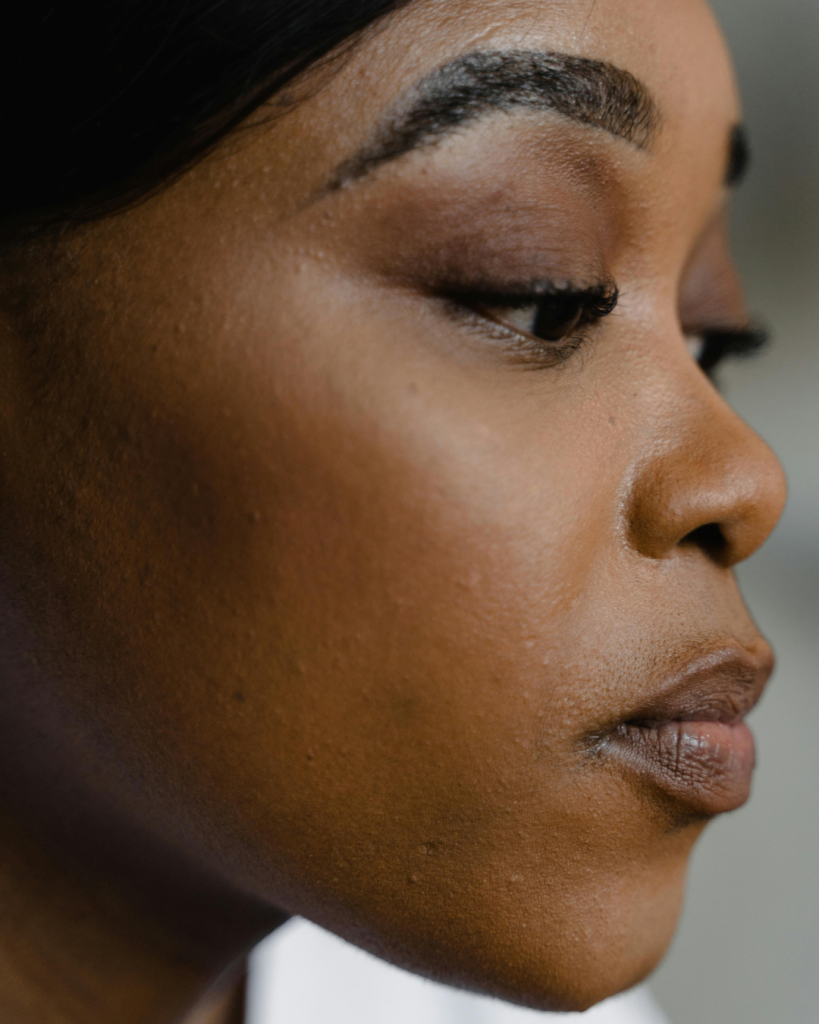
Exfoliants promise instant glow, but on melanin-rich skin, they can just as easily deliver irritation and darker patches when pushed too far. The aim isn’t to see how much skin can “handle”; it’s to keep things soft, steady and boring so texture improves without waking up hyperpigmentation. What exfoliation actually is Exfoliation is simply helping the skin shed old, dead cells from the surface. When done gently, this reveals smoother skin, helps pores look clearer, and lets serums and moisturisers sink in more evenly. Done harshly (strong acids, gritty scrubs, daily “peels”), it chips away at the barrier, increases sensitivity, and can turn into post-inflammatory hyperpigmentation on melanin-rich skin. Types of exfoliants Two main families show up on shelves: Physical exfoliants Scrubs, brushes and tools that manually buff the surface. Anything with large or scratchy particles can create micro-tears, redness and, in deeper complexions, new dark spots. Ultra-fine, cream-based scrubs used very occasionally are usually safer than coarse “natural” grains. Chemical exfoliants Leave-on liquids, toners, pads or serums that dissolve the “glue” between dead cells so they shed more evenly. The main types: Why melanin-rich skin needs a softer exfoliation strategy Darker skin is very good at making melanin, including melanin in response to irritation. Any product that repeatedly “tingles”, burns, or leaves skin feeling tight can set off inflammation, leading to darker patches over time. Over-exfoliation is linked to barrier damage, increased sensitivity, more breakouts, and worsening pigmentation, especially when acids, scrubs, and retinoids are stacked together with no recovery days. For melanin-rich skin, that means: What to look for on the label Instead of chasing whatever is “strongest”, melanin-rich skin can shop for exfoliants with a clear brief: For very sensitive or reactive skin PHA toner or serum; mandelic or low-strength lactic as a starting acid. Look for wording like “gentle exfoliant”, “sensitive-skin friendly”, “hydrating acid”. For acne-prone melanin-rich skin Salicylic acid in a wash-off cleanser or a leave-on product at a sensible strength, not layered with multiple other exfoliating acids nightly. Pair it with soothing, non-comedogenic hydration rather than scrubs. For hyperpigmentation and dullness Lactic or mandelic acid formulas that call out brightening and radiance, used a few nights per week, plus daily SPF 50. Exfoliants are treated as “supporting acts” alongside pigment-targeting ingredients, not the whole show. In-clinic exfoliation for melanin-rich skin Home exfoliants are only half the story; some concerns need professional help. For melanin-rich skin, the safest in-clinic options are usually gentle, layered treatments planned by someone who understands pigment risk, not one-off, high-strength peels. Options commonly used with care in darker skin tones include: A useful mindset: the best exfoliant for melanin-rich skin isn’t the one that makes you peel fastest, it’s the one you barely notice — except for the way skin looks smoother, calmer and more even month after month.

Exfoliants & Melanin-Rich Skin: Smooth, Not Stripped Read More »
Vitamin A & Melanin-Rich Skin: What You Need to Know

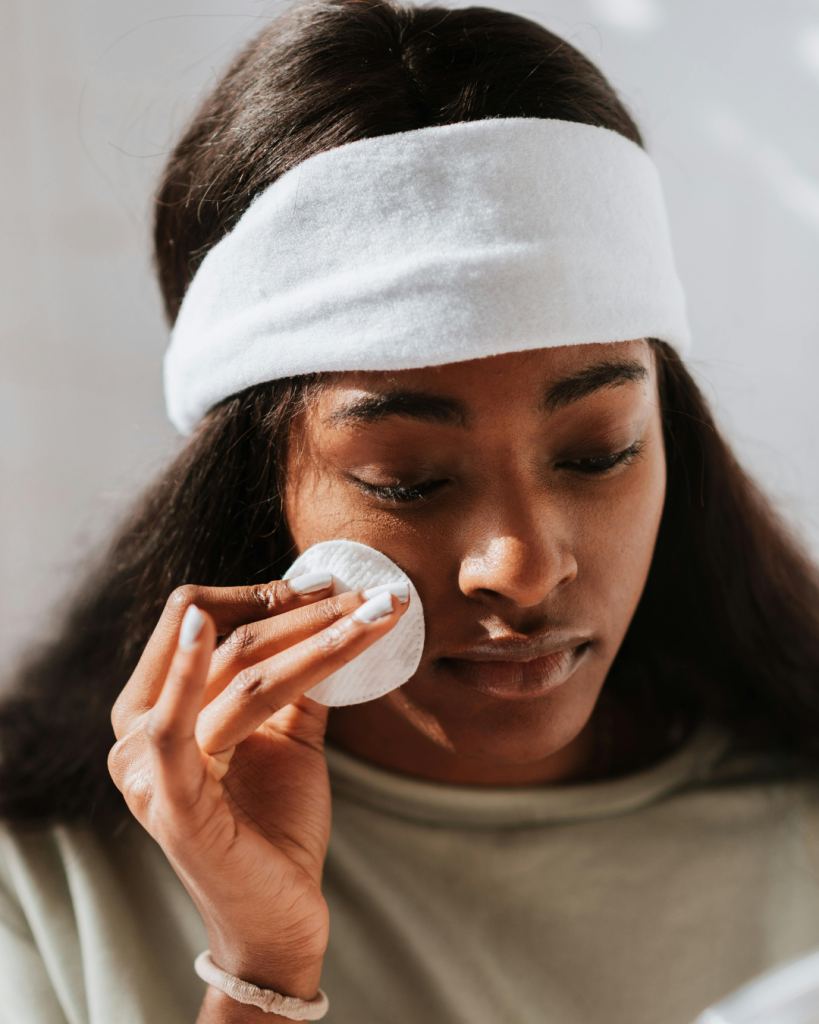
Vitamin A (retinoids) is one of the few skincare families that can genuinely change how skin behaves over time. It helps skin shed old, dull cells faster, supports collagen, and can reduce breakouts and the dark marks they leave behind. For melanin-rich skin, that’s huge — texture, tone and acne all sit in its wheelhouse. The catch? Skin of colour is more prone to post-inflammatory hyperpigmentation. If a vitamin A product is too strong or used too often, irritation doesn’t just mean “a bit red”; it often means new dark patches that hang around. So, the question isn’t “Can skin of colour use vitamin A?” but “How do we get the benefits without stirring up pigment?” What exactly is vitamin A in skincare? “Vitamin A” on a label usually shows up under different names, all part of the same family: retinoids. They sit on a spectrum from soft and slow to strong and spicy: A simple way to explain it to clients: the closer a form is to retinoic acid, the faster it works and the more likely it is to irritate if mishandled. Why Melanin-Rich Skin needs a different vitamin A strategy All skin can get irritated by retinoids, but skin of colour tends to memorise irritation as pigment. Any repeated inflammation, over-exfoliation, harsh cleansers, or too-strong vitamin A can leave behind lingering dark patches, especially around the mouth, cheeks, and jawline. That’s why melanin-rich skin does better with: Instead of chasing maximum strength, the goal is steady, sustainable progress with as little drama as possible. Retinal: a vitamin A sweet spot for melanin-rich skin Retinal (retinaldehyde) has become a favourite in modern formulations because it balances power with comfort. It needs only one conversion to reach the active form, which means it can work faster than retinol, yet many encapsulated or cream-based retinal products are designed to be kind to sensitive skin. For melanin-rich skin, that matters because: In other words, retinal lets melanin-rich skin access the benefits of vitamin A without constantly skirting the edge of a compromised barrier. Can pregnant or breastfeeding people use retinal? This is one area where the answer needs to be crystal clear. High doses of vitamin A taken by mouth (like certain supplements or prescription acne tablets) are linked with birth defects, and prescription topical retinoids are generally not recommended in pregnancy. Because of that, most dermatologists and professional bodies take a cautious approach and advise avoiding all topical vitamin A — retinal, retinol, retinyl esters, and prescription creams — during pregnancy, when actively trying to conceive, and breastfeeding. Even though the amount absorbed from skincare is much lower than that from tablets, safety data during pregnancy are limited. Out of caution, the standard advice is: Product recommendations: What to look for New to vitamin A (melanin-rich beginners) Goal: gentle first step into vitamin A with minimal drama. For acne-prone, hyperpigmentation and uneven skin tone A retinal designed for breakouts and texture that also includes soothing ingredients like niacinamide or panthenol and doesn’t stack strong acids in the same bottle. Goal: clear congestion and reduce PIH without stripping the barrier. Anti-ageing / prevention (non-pregnant, melanin-rich skin) Goal: soften early fine lines, support collagen production, and maintain smooth skin texture. Vitamin A can work beautifully on skin of colour when it’s done gently and intentionally, not aggressively. With the right form (often retinal), a slow introduction, and solid sun protection, it becomes a quiet long-term investment in clearer, smoother, more even skin rather than a quick fix that backfires.

Vitamin A & Melanin-Rich Skin: What You Need to Know Read More »

Large Pores

Large pores are one of those skin concerns that get marketed badly. You will see products claiming to “close pores,” “erase pores,” or give you “poreless skin.” But pores are a normal part of the skin. They do not open and close like doors, and you cannot permanently shrink them with skincare. You can make them look less obvious. Large pores usually look more noticeable when they are filled with oil, dead skin, sunscreen, makeup, or congestion. They can also look more stretched when the skin is oily, textured, dehydrated, or losing firmness. So, the goal is not to close the pore. The goal is to keep the pores clear, control excess oil, smooth the skin’s surface, and support the skin’s structure. That is what makes a difference. What Works Best for Large Pores? The ingredients that make the biggest difference are: Salicylic acid This is one of the best ingredients for large-looking pores, especially if you also deal with blackheads, congestion, or oiliness. Salicylic acid is oil-soluble, so it can work inside the pore where oil and dead skin build up. This helps the pore look cleaner and less stretched. Paula’s Choice describes its 2% BHA Liquid as a salicylic acid exfoliant that helps unclog pores and visibly reduce the appearance of enlarged pores. Retinoids Retinoids help improve skin texture, support cell turnover, and keep congestion from building up as easily. Over time, they can also support firmer-looking skin, which matters because pores tend to look larger when the skin loses bounce and structure. Medik8 describes its retinal range as supporting smoother-looking skin, improved texture and tone, oil management, and clearing pore debris. Niacinamide Niacinamide is useful when pores appear worse due to excess oil, uneven texture, or skin barrier stress. It is not a magic pore eraser, but it can help the skin look smoother and more balanced. The Ordinary describes its niacinamide and zinc serum as targeting dullness, uneven texture, excess oil, and helping reduce the appearance of pores. Sunscreen This is the step people forget. Sun damage affects collagen and skin firmness. When the skin loses firmness, pores can look more obvious, especially around the cheeks. Sunscreen will not shrink pores overnight, but it helps protect the skin’s structure in the long term. Products What Not to Waste Time On Pore strips can remove surface debris, but they do not address why pores keep filling up. Harsh scrubs can make skin smoother for a day, but they can also irritate the skin barrier and worsen the texture. Clay masks can help temporarily reduce shine, but they are not a full pore routine. Very drying cleansers can make the skin feel “clean,” but they often leave it tight and dehydrated. Dehydrated skin can make pores and texture look more obvious.

Large Pores Read More »

Inner Thigh Pigmentation

Pigmentation on the inner thighs is common. For many people, this area naturally appears slightly darker because skin tone is not evenly distributed across the body. The concern is when the area becomes noticeably darker over time, feels irritated, rough, itchy, or becomes more marked after chafing, tight clothing, sweating, shaving, waxing, or product irritation. Inner thigh pigmentation happens when the skin produces excess melanin in that area. This can be triggered by repeated friction, dryness, inflammation, or irritation. What Can Cause It? Common causes include: For many people, friction is one of the biggest triggers. If the thighs rub together often, the skin can stay slightly irritated, which may make pigmentation more noticeable over time. What Helps? The first step is to reduce irritation. Keep the area clean with a gentle, soap-free wash. Avoid harsh soaps, scented shower gels, scrubs, exfoliating gloves, lemon juice, and baking soda. Moisturise daily to support the skin barrier and reduce dryness. If the thighs rub together, use a thin layer of balm, such as Vaseline, on high-friction days to help reduce chafing. Once the skin feels calm, you can introduce ingredients that support uneven tone. Helpful ingredients include: These ingredients can help improve the look of pigmentation, but they need to be used carefully. Do not apply them to broken, freshly shaved, waxed, sore, or irritated skin. Professional Treatments If pigmentation is stubborn, professional treatments may be an option. Chemical peels can help exfoliate the skin and improve uneven tone. These should be chosen carefully because the inner thighs are prone to friction and irritation. Laser treatments may help some types of pigmentation, but they need to be performed by someone experienced with skin that marks easily. The wrong settings can cause burns or worsen pigmentation. Microdermabrasion physically exfoliates the skin, but it may be too abrasive for this area if the skin is already irritated or chafed. Professional treatments work best when the daily triggers, especially friction and irritation, are also being managed. What to Avoid Avoid fragranced skincare, essential oils, drying alcohols, harsh scrubs, and overusing strong actives. If a product stings, burns, makes the skin feel hot, or causes itching, it is likely too irritating for the area. Products

Inner Thigh Pigmentation Read More »

Dark Underarms in Melanin-Rich Skin: What Actually Helps?

We need to establish something important: slightly darker underarms are normal. Skin colour is not evenly distributed across the body. Even in children, areas like the underarms, inner thighs, knees, elbows, bikini line, and around the mouth can naturally appear deeper than the surrounding skin. The goal should never be to bleach the underarms until they match the rest of the body perfectly. That is usually unrealistic, and in many cases, unnecessary. The real concern is when the underarms become noticeably darker over time, feel irritated, itchy, thickened, or sore. That is when we look at what may be aggravating the area. Most underarm pigmentation is not a hygiene issue. It is often linked to repeated irritation: shaving, waxing, deodorant reactions, tight clothing, sweating, scratching, friction, or using products that are too harsh for such a delicate area. The underarm is thin, folded skin. It is constantly moving, rubbing, and being exposed to hair removal and deodorant, so it does not take much for irritation to build up. In skin that marks easily, repeated irritation can lead to more visible pigmentation over time.  Step 1: Stop Irritating the Area First Before reaching for brightening products, look at what may be keeping the skin inflamed. If your deodorant stings, burns, makes the skin itchy, or leaves the underarms feeling raw, it may not be the right formula for you. If you shave dry, use a blunt razor, or go over the same area several times, that can create tiny injuries in the skin. If your clothes are tight around the underarms, friction can keep the pigmentation going. Step 2: Rethink Hair Removal Hair removal is one of the biggest triggers of underarm pigmentation. Shaving is not automatically bad, but shaving badly is a problem. Dry shaving, pressing too hard, using an old razor, or shaving over irritated skin can lead to razor bumps, micro-cuts, and inflammation. In melanin-rich skin, that inflammation can become pigmentation. If you shave, do it on damp skin with enough slip. Use a clean, sharp razor and light pressure. Do not keep going over the same area trying to get it perfectly smooth. If you use depilatory creams, be careful. These products chemically dissolve hair, so leaving them on too long or using them on already irritated skin can cause burns or irritation, which may worsen pigmentation. Product example: Veet Hair Removal Cream Sensitive Skin — a sensitive-skin option, but still patch test and follow the timing exactly.  Laser hair reduction can be a good option for some people because it reduces the need for constant shaving or waxing. But it should be done by someone experienced with deeper skin tones, because the wrong settings can cause burns or more pigmentation. Also, a laser is best described as long-term hair reduction, not guaranteed permanent removal. Step 3: Calm the Skin Before Brightening This is where many people get it wrong. They go straight to brightening products while the underarms are still irritated. If the skin is stinging, itchy, peeling, sore, or freshly shaved, it is not the time to add acids or strong actives. Calm the area first. Use a mild cleanser. Avoid lemon juice, baking soda, harsh scrubs, rough exfoliating gloves, and DIY “brightening” mixtures. These often make the problem worse by irritating the skin. Cleanse gently, avoid scrubbing, and stop using anything that causes burning or discomfort. Product examples: Cetaphil Ultra Gentle Refreshing Body Wash is a soap-free, fragrance-free wash suitable for dry and sensitive skin.  Qv Gentle Wash Re-hydrates dry skin. Cleanse your skin without leaving it dry and tight with soap-free QV Gentle Wash. Specially prepared for dry or sensitive skin Step 4: Add Gentle Exfoliation Once the skin is calm, gentle exfoliation can help with texture and uneven tone. The keyword is gentle. Underarms do not need aggressive scrubbing. Physical scrubs and rough mitts can worsen friction and irritation, especially in deeper skin tones. A chemical exfoliant used once or twice a week is usually a better option than daily scrubbing. Add Exfoliation and Brightening Support Carefully Once the area is calm, ingredients like glycolic acid and kojic acid can be useful. Glycolic acid helps exfoliate the skin’s surface layers, which can improve roughness, dullness, and uneven skin tone over time. It is a good option for underarms, but it needs to be used properly. This is not an area where you want to apply acids every day or use them straight after shaving. Start once a week at night on clean, dry skin. Avoid applying it after shaving, waxing, or when the skin feels itchy, sore, raw, or irritated. If the area stings or feels hot, reduce the frequency or stop until the skin settles. Kojic acid is different. It is more pigment-focused. It helps support uneven tone by targeting excess pigment production, so it can be useful when the main concern is darkening rather than bumps or texture. Product examples: The Ordinary Glycolic Acid 7% Exfoliating TonerBest for: uneven tone, dullness, and mild rough texture.How to use: once weekly at night, not after shaving or waxing. Naturium The Smoother Glycolic Acid Exfoliating Body WashBest for: people who prefer a rinse-off option rather than leaving an acid on their underarms.How to use: leave on briefly, rinse off, and avoid using on freshly shaved or irritated skin. Kojie San Skin Lightening SoapBest for: people who want kojic acid in a wash-off format.How to use: Use cautiously and do not leave it on too long. This can be drying or irritating for some people, so the underarms need close monitoring. Step 5: Introduce Brightening Support Once you have reduced irritation, improved hair removal habits, and calmed the area, brightening ingredients can be more useful. Look for ingredients that support uneven tone without constantly irritating the skin. Examples include niacinamide, azelaic acid, licorice extract, alpha arbutin, vitamin C derivatives, and other pigment-supportive ingredients. Product examples: The Ordinary Niacinamide 10% + Zinc 1% — a niacinamide serum that targets dullness, uneven texture, and barrier

Dark Underarms in Melanin-Rich Skin: What Actually Helps? Read More »

Why Dark Marks Linger in Melanin-Rich Skin

Dark marks after breakouts are among the most common concerns for melanin-rich skin. They can appear after acne, ingrown hairs, shaving bumps, eczema flares, product reactions, picking, friction, or over-exfoliation. What is post-inflammatory hyperpigmentation, or PIH? PIH is the darker mark or patch left behind after inflammation. It happens when the skin produces extra pigment in response to irritation or injury. In melanin-rich skin, this response can be stronger and longer-lasting because the pigment system is naturally more active and responsive. What Causes PIH? PIH begins with inflammation. When the skin is irritated, the body sends repair signals to the area. These signals help the skin heal, but they can also stimulate melanocytes, the cells that produce melanin. Melanin is the pigment that gives skin its colour and helps protect it from stressors such as UV light. When melanocytes are triggered, they can produce extra melanin in the affected area. As the skin renews itself, that pigment becomes visible as a dark mark. This is why a breakout can leave a mark long after the spot itself has healed. Why Melanin-Rich Skin Marks More Easily In melanin-rich skin, pigment cells are more responsive to inflammation. This is not a weakness. It is part of how the skin protects itself. But it also means that irritation is more likely to leave visible pigmentation behind. In lighter skin tones, inflammation may show as temporary redness. In deeper skin tones, the same inflammation is more likely to leave a brown, grey-brown, purple-brown, or shadow-like mark. This is why acne, shaving irritation, eczema, and harsh routines can feel more complicated in melanin-rich skin. The concern is not only the inflammation itself, but what it leaves behind. Common PIH Triggers PIH can develop after many forms of irritation, including acne, cystic breakouts, ingrown hairs, shaving bumps, eczema, dermatitis, picking, scratching, friction, harsh scrubs, strong exfoliants, peels, or the use of active ingredients too aggressively. The common link is inflammation. Once the skin becomes inflamed, pigment-producing cells can become more active in that specific area. This is why preventing new irritation is just as important as fading existing marks. Why Dark Marks Take Time to Fade By the time a dark mark is visible, the pigment response has already happened beneath the surface. Some marks sit closer to the surface and fade more quickly. These often look browner. Others appear grey-brown, blue-brown, or shadowy, which may suggest pigment sitting deeper in the skin and taking longer to improve. PIH can also feel persistent when the same area keeps being triggered. If breakouts keep returning to the cheeks or jawline, if shaving bumps keep forming, or if daily friction occurs, the skin keeps receiving inflammatory signals. New marks appear before old ones have had time to fade. This is often why people feel like their pigmentation is not improving. The issue is not always that nothing is fading. Sometimes, new inflammation is constantly creating new marks. Why Aggressive Routines Can Make PIH Worse When dark marks appear, it is common to reach for stronger products: more exfoliation, more acids, more brightening serums, or harsher scrubs. But irritation can worsen PIH. If the skin barrier becomes compromised, the skin becomes more reactive. Greater reactivity can lead to more inflammation, and more inflammation can keep pigment cells active. So while the goal is to fade pigmentation, an aggressive routine can end up creating the conditions for more pigmentation. Why One Brightening Serum Is Usually Not Enough A brightening serum can help, but PIH is rarely a one-product issue. Dark marks are influenced by acne activity, barrier health, sun exposure, visible light exposure, shaving habits, friction, picking, and routine consistency. If breakouts are still active, more marks will form. If the barrier is irritated, the skin may not tolerate corrective ingredients well. If daily protection is inconsistent, pigmentation can last longer or deepen. If the routine changes too often, the skin may not get enough time to respond. This is why PIH needs a structured approach: reduce new triggers, calm the skin, protect it daily, and use targeted ingredients consistently. A Better Way to Approach PIH A good PIH routine should not only ask, “How do we fade the mark?” It should also ask, “What caused the mark, and is that trigger still happening?” If acne is the trigger, acne needs to be managed. If shaving bumps are the trigger, shaving technique and inflammation control matter. If eczema or dermatitis is involved, the barrier needs support. If friction is contributing, repeated rubbing needs to be reduced. If the routine itself is causing irritation, the first step may be simplifying before correcting. This is why treating PIH in melanin-rich skin requires more than choosing a brightening ingredient. The whole routine needs to make sense.

Why Dark Marks Linger in Melanin-Rich Skin Read More »

Melanin-Rich Skin Needs a Plan, Not Another Product

Skin of colour is not one skin type. It includes a wide range of melanin-rich skin tones, including Black, Brown, South Asian, East Asian, Southeast Asian, Middle Eastern, Pacific Islander, First Nations, Latin, Brazilian and mixed-heritage skin tones. A person can have melanin-rich skin and still be oily, dry, sensitive, acne-prone, mature, dehydrated or reactive. So, the difference is not that melanin-rich skin has a completely different structure. At a basic level, all human skin has the same essential components: a skin barrier, oil glands, collagen, blood vessels, immune cells and melanocytes. The difference is how pigment behaves. Melanocytes are the cells that produce melanin. Everyone has them, but in deeper skin tones, the pigment system is more active, and the pigment is more visible in the skin. This matters because irritation, inflammation or injury can leave behind pigmentation that is more noticeable and slower to fade. A breakout, product reaction, shaving irritation, waxing trauma, picking, over-exfoliation, heat, or an aggressive treatment can all leave discolouration behind. This is one of the main reasons melanin-rich skin needs more consideration when choosing products, introducing treatments and building a routine. Pigmentation is not just a brightening serum problem If the skin is still breaking out, over-exfoliated, stripped by a cleanser, irritated by too many actives or unprotected during the day, pigmentation becomes harder to manage. The focus should not only be on what fades the mark. It should also address what caused the mark, whether the skin is still irritated, and whether the current routine is supporting the skin or working against it. A product can be suitable for pigmentation yet inappropriate for the skin at that stage. If the barrier is compromised, strong actives may create more irritation. If acne is still active, only treating the leftover marks misses the source of the problem. If sunscreen is inconsistent, pigmentation can deepen and take longer to improve. Treatment needs to be introduced slowly Melanin-rich and pigment-prone skin often responds better when treatment is introduced gradually. This does not mean avoiding active ingredients. Azelaic acid, retinoids, vitamin C, tranexamic acid, niacinamide, gentle exfoliants and pigment-supporting serums can all have a role. The important part is choosing the right ingredient for the concern and introducing it at a pace the skin can tolerate. The structure is the same, the strategy is different The basic structure of a skincare routine is the same for most people: cleanse, treat, nourish and protect. What changes with melanin-rich skin is the level of care behind each step. Clean Clean means cleansing without stripping the skin. A cleanser should remove sunscreen, makeup, oil, and daily buildup without leaving the skin tight, squeaky, or uncomfortable. For melanin-rich, pigment-prone skin, cleansing is one area where the approach may need to shift. Most people choose a cleanser based only on skin type. If the skin is oily, they reach for a foaming cleanser. If the skin is acne-prone, they reach for an acne cleanser. If the skin feels dull, they may start using exfoliating cleansers more often. But the choice of cleanser should also take into account the condition of the skin. If the skin is tight, dry, shiny, irritated, stinging, over-exfoliated or dealing with pigmentation after inflammation, aggressive cleansing can make the rest of the routine harder to tolerate. The skin may need a gentler approach before introducing treatment products. For some people, that may mean skipping a full morning cleanse and simply rinsing with water. For others, it may mean using a very gentle water-based cleanser in the morning, then a cleanser suited to their skin type in the evening. Someone wearing makeup, sunscreen or heavier products may still need a more thorough cleanse at night. The point is not that everyone with melanin-rich skin should cleanse the same way. The point is that cleansing should not leave the skin feeling stripped. Product examples:  CeraVe Hydrating Cream To Foam Cleanser  Haruharu Wonder Black Rice Moisture 5.5 Soft Cleansing Gel  Naturium Niacinamide Cleansing Gelée 3%  The Ordinary Glycolipid Cream Cleanser Treat Treat is where the main concern is addressed, whether that is acne, pigmentation, dullness, texture or uneven tone. This step should be targeted, not overloaded. In melanin-rich skin, treatments are usually better introduced gradually so the skin has time to build tolerance. Product examples:   Medik8 Crystal Retinal The Ordinary Azelaic Acid Suspension 10% Murad Rapid Dark Spot Correcting Serum Nourish Nourish supports the skin barrier. Moisturiser is not just a comfort product. It helps the skin tolerate treatment products and reduces dryness, tightness and irritation. This becomes especially important when using retinoids, exfoliating acids, acne treatments or pigment-supporting products. Product examples:   CeraVe Moisturising Cream Clinique Moisture Surge Medik8 Total Moisture Daily Facial Cream Protect Protect means daily sunscreen. This matters for everyone, but it becomes especially important when dark marks, melasma or uneven tone are part of the concern. Many deeper skin tones do not burn easily, but UV exposure can still deepen pigmentation and slow progress. Product examples:   La Roche-Posay Anthelios Ultra Invisible Fluid SPF50+ Ultra Violette Supreme Screen SPF50+ Beauty of Joseon Relief Sun SPF50+ A note on product examples The products mentioned are examples only. They are not a prescription, and they are not intended to be used all at once. The right routine depends on the person’s skin history, current products, sensitivity, pigmentation pattern, lifestyle, budget and consistency. Product choice matters, but product order, tolerance and timing matter just as much. Final thought Melanin-rich skin needs a routine built around pigment control, barrier support and irritation management. That is the difference. The goal is not to use more products. The goal is to use the right products in the right order, at the right pace, with sufficient support and protection. That is how home care becomes a treatment plan, not just a collec

Melanin-Rich Skin Needs a Plan, Not Another Product Read More »

Shopping Cart